
Traffic Warrants in Kalamazoo County
Michigan splits traffic cases in two. Civil infractions go to the 8th District Court Traffic Division, while traffic misdemeanors land in the criminal division. That split decides who answers your warrant question in Kalamazoo County. A missed infraction does not become a warrant on its own. State traffic materials describe a statutory process, including a sworn complaint, before a warrant can enter a civil-infraction matter. Default judgment, added fees, and license trouble can all arrive long before any warrant exists.
How to Check for a Traffic Warrant
Begin with the citation itself. Look for the court named on it. Every channel here is public, and none of them is a driving record; what you are checking is whether a Kalamazoo County court case exists and whether anything is outstanding on it.
- Read the ticket for the court location, citation number, and response date.
- Search the citation in the state ticket and case payment system, choosing the right Kalamazoo court option.
- Call the 8th District Court Traffic Division at 269-384-8171 to ask whether the case is open and whether a warrant has issued.
- Use the public case search if the matter moved beyond a payable ticket or was charged as a misdemeanor.
- Request the record in writing if you need the document rather than a status answer.
Sometimes a citation points to a city instead of the Kalamazoo County court. The issuing police agency still holds the original report.
The Kalamazoo County Traffic Warrant Timeline
Timing is where people slip. A person generally gets ten calendar days from the citation date to deny, admit, or pay a civil infraction in Kalamazoo County. Miss it, and default judgment follows with a $25 default fee. That is only the start. Continued nonresponse can bring suspended driving privileges, added fees, and a conviction reported to the Secretary of State. Kalamazoo County drivers assume this stack means a warrant. It does not. A warrant is a separate court action. The statute and the court's own record decide whether one exists, not a fee total. Note: new tickets can take three business days to appear in the payment system, so a citation issued this week may not be searchable yet.
Kalamazoo County Ticket Lookup vs Warrant Status
The state's ticket search finds a payable ticket and takes your payment. Warrant status is not in it. Kalamazoo County also blocks ordinary payment for active bench warrants and suspended parking tickets. The statewide ticket and case search requires a county and court selection before any search mode will run.
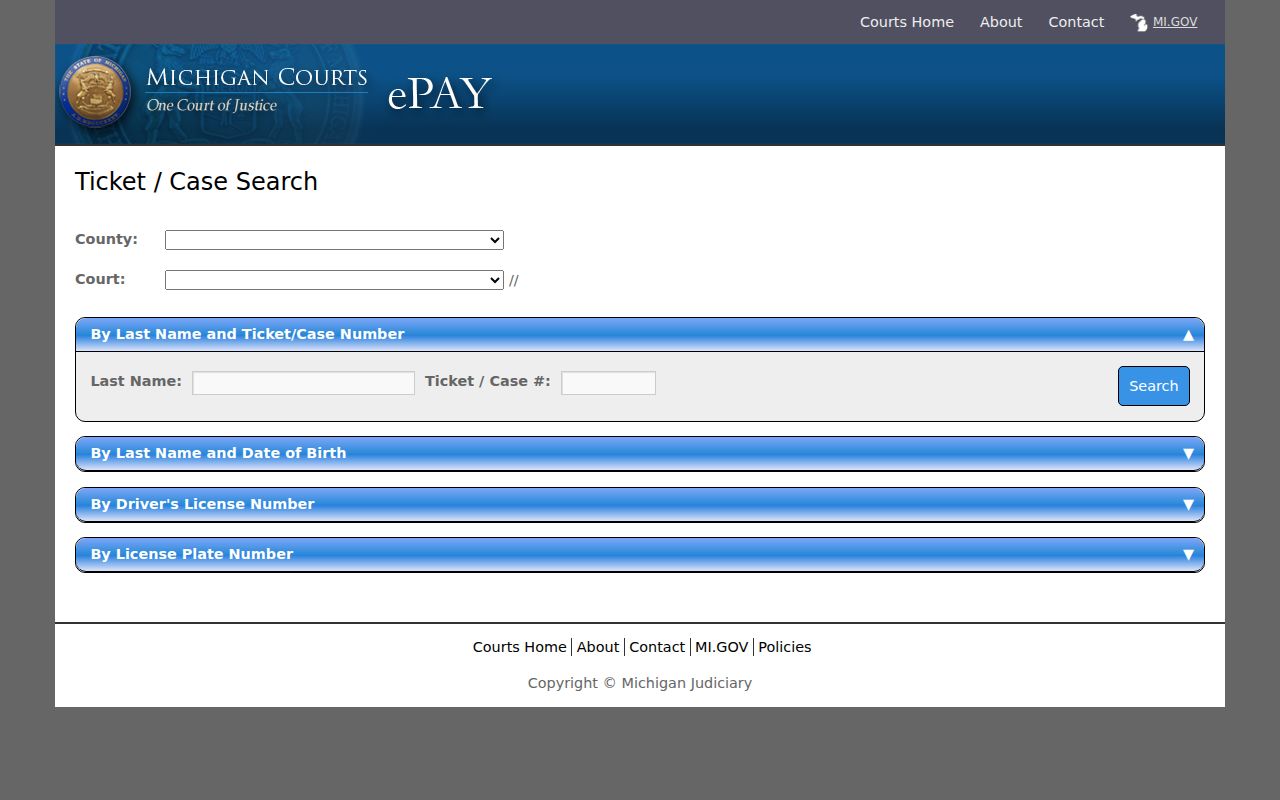
The Kalamazoo list holds three district court entries: Crosstown, North, and Portage. One court number serves them all.
What a Traffic Warrant Shows
A Kalamazoo County traffic warrant carries the same fields as any other court warrant, plus the citation history behind it.
| Case or Citation Number | The court case identifier, in the year-sequence-type pattern, for example 2026-0123456. |
|---|---|
| Violation | The infraction or misdemeanor the citation charged, with the statutory reference. |
| Issuing Court | The 8th District Court location handling the matter, which holds the recall authority. |
| Fees and Defaults | The $25 default fee on a missed civil-infraction response, plus any added costs. |
| Status | Open, defaulted, or warrant issued. Ask the clerk which one applies to you. |
Paying or Lifting a Traffic Warrant
Payment alone does not lift a warrant. Only the issuing court decides that. A payment made without a court instruction can leave the warrant standing, so confirm what the Kalamazoo County court wants and follow the route it gives you.
Watch this limit: The county does not accept payment for active bench warrants through the ordinary ticket route, so a rejected payment is not proof the fine is gone.
Payment routes for payable tickets run online, in person, by phone, by mail, and by drop box at the Pratt Justice Center, which is open around the clock. Never put cash in the drop box. Mail needs the signed ticket, the payer's name and contact information, and the ticket or case number, sent to 330 Eleanor Street. That covers ordinary tickets, though. A warrant changes the route. Ask the Kalamazoo County court about a payment plan or a new court date rather than paying at the counter.
Default Judgment and Kalamazoo County Warrants
A default judgment is a court decision. It is entered because a person did not respond. It is a civil-infraction outcome, not a warrant. A default adds a $25 fee. The conviction is reported to the Secretary of State, and it can build toward a suspended license if the person keeps not responding. Kalamazoo County's Traffic Division page sets out the response window, the default consequences, and the traffic-misdemeanor routing in the court's own words.
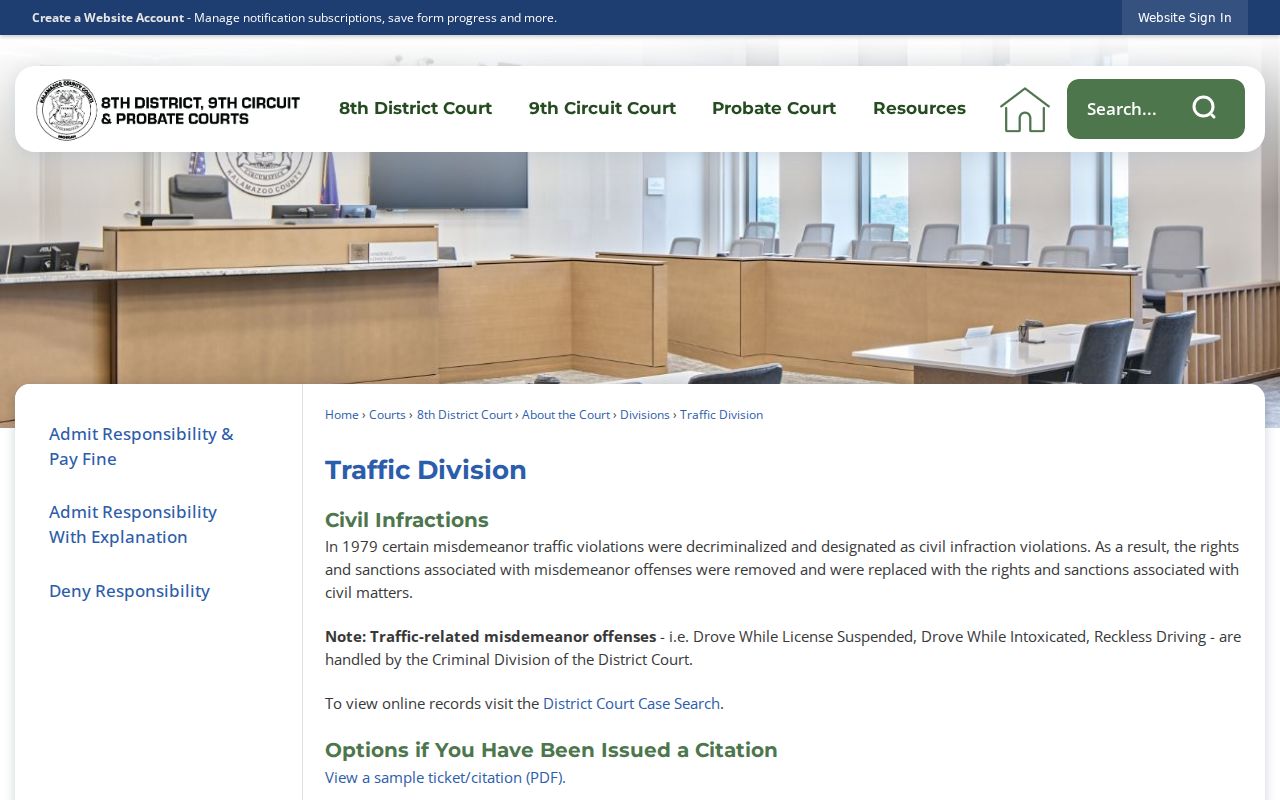
Reading it first saves a phone call. The page already answers the most common Kalamazoo County question: whether a missed ticket means a warrant.
Traffic Warrant vs FTA and License Holds
People blend three outcomes into one. A warrant, a failure to appear, and a license hold are not the same on paper in Kalamazoo County, and telling them apart shows which office to call and what can actually be cleared.
| Outcome | What It Means | Where It Is Fixed |
|---|---|---|
| Default judgment | The court decided the case because no response was filed | The 8th District Traffic Division |
| Failure to appear | A missed required court date on the case | The court that set the date |
| License consequence | A suspension or added fee that follows from the failure to answer | The court and the Secretary of State |
| Bench warrant | A court order to bring the person in on the existing case | The issuing court, by recall or appearance |
The rules apply in Kalamazoo County. The statute covering a failure to answer a traffic citation describes when a suspension and added fees can follow.
Portage Tickets and Kalamazoo County Warrants
Where a ticket is written does not decide where it gets answered. Portage's annual report describes computerized traffic tickets interfacing with the 8th District Court beginning in 2007. The city's phone directory lists the same court number. So a Portage citation is searched in the countywide system rather than through a separate city court. Portage Police holds the report itself. The court owns the case, the default, and any warrant. Two different roles. Keeping them apart prevents the classic dead end of asking a Kalamazoo County police records desk for warrant status it does not track. Call the right office first.
Equipment Tickets and Kalamazoo County Warrants
A defective-equipment ticket in Kalamazoo County comes with its own cure, and taking that route sidesteps the default process altogether. Fix the equipment first. Then have a police officer confirm the repair and sign the ticket. From there, mail it or hand-deliver it to the court at 330 Eleanor Street. Once the signed ticket arrives, the judge resolves the matter on the equipment itself rather than on a missed response. That difference matters. A resolution on the equipment basis carries no default fee and opens no path toward a warrant. The clock still runs, though, so complete the repair and get the officer's signature before the response deadline passes.